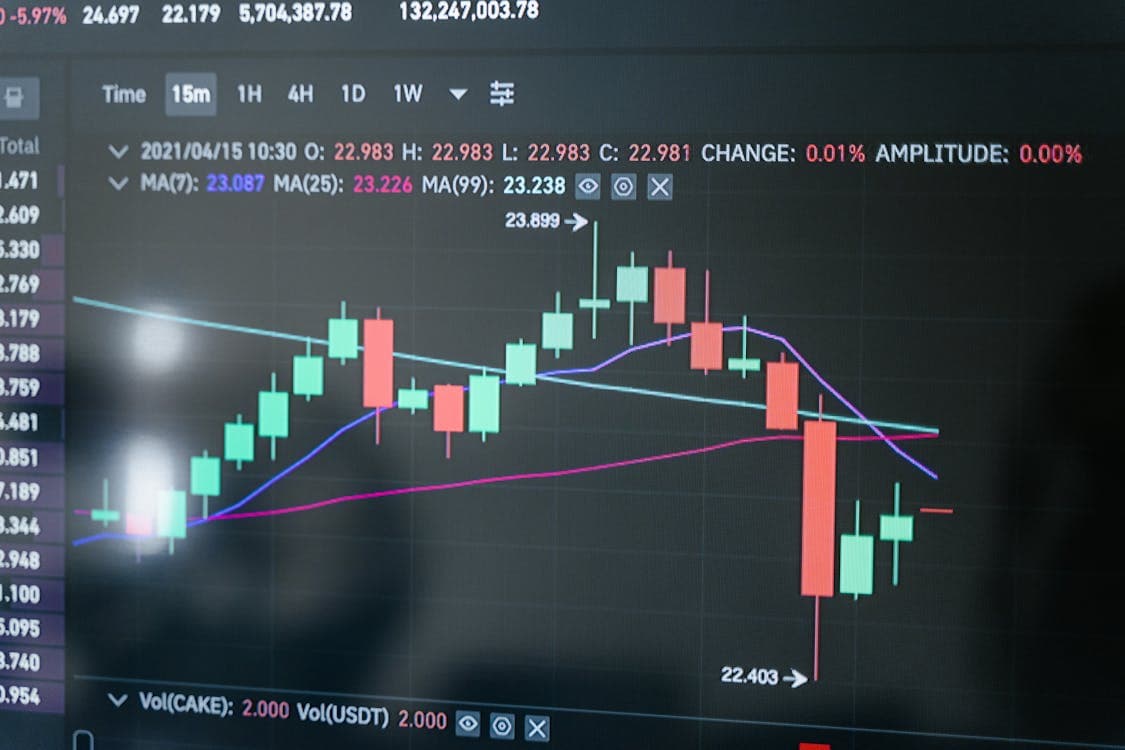
Risk & Probability
IntermediateRisk and probability are interconnected concepts that form the quantitative backbone of financial decision-making. Probability is the mathematical measure of how likely an event is to occur, expressed as a number between 0 (impossible) and 1 (certain). Risk, in a financial context, refers to the possibility that an investment's actual return will differ from its expected return — including the chance of losing some or all of the original investment. Together, these concepts provide the framework for evaluating uncertainty, pricing assets, and making rational choices under conditions where outcomes are not guaranteed.
At the heart of financial risk analysis lies the risk-return tradeoff: investments with higher potential returns generally carry higher risk. This relationship is quantified through tools like expected value (the probability-weighted average of all possible outcomes), standard deviation (which measures how spread out returns are around the average), and probability distributions (which map out the full range of possible outcomes and their likelihoods). Investors use these tools to compare investments not just by their average returns but by how much variability or downside exposure each one carries.
A critical distinction in risk management is between systematic risk (market-wide risk that affects all investments, such as recessions or interest rate changes) and unsystematic risk (risk specific to a single company or industry, such as a product recall or management scandal). Diversification — spreading investments across multiple assets — can reduce unsystematic risk but cannot eliminate systematic risk. Understanding this distinction helps explain why a well-diversified portfolio still fluctuates with the broader market, and why concepts like risk tolerance and probability assessment are essential skills for anyone making financial decisions, from choosing a retirement fund to evaluating a business venture.
Practice a little. See where you stand.
Quiz
Reveal what you know — and what needs work
Adaptive Learn
Responds to how you reason, with real-time hints
Flashcards
Build recall through spaced, active review
Cheat Sheet
The essentials at a glance — exam-ready
Glossary
Master the vocabulary that unlocks understanding
Learning Roadmap
A structured path from foundations to mastery
Book
Deep-dive guide with worked examples
Key Concepts
One concept at a time.
Explore your way
Choose a different way to engage with this topic — no grading, just richer thinking.
Explore your way — choose one:
Curriculum alignment— Standards-aligned
Grade level
Learning objectives
- •Calculate expected value by weighting possible outcomes by their probabilities
- •Explain the risk-return tradeoff and why higher returns require accepting greater uncertainty
- •Use standard deviation to compare the riskiness of different investments with similar average returns
- •Distinguish between systematic and unsystematic risk and explain how diversification reduces only the latter
- •Evaluate common misconceptions about risk including the belief that past performance predicts future results
Related Topics
Finance
The study of how individuals, businesses, and institutions manage money, investments, and risk, encompassing corporate finance, financial markets, portfolio management, and personal financial planning.
Probability
The mathematical study of uncertainty and random phenomena, providing tools to quantify likelihood, analyze data, and make decisions under uncertainty.
Statistics
The science of collecting, analyzing, and interpreting data using descriptive measures, inferential methods, and probability theory to draw meaningful conclusions and inform decision-making.
Debt & Leverage
How borrowed money amplifies both gains and losses, and the tools used to measure and manage financial leverage responsibly.