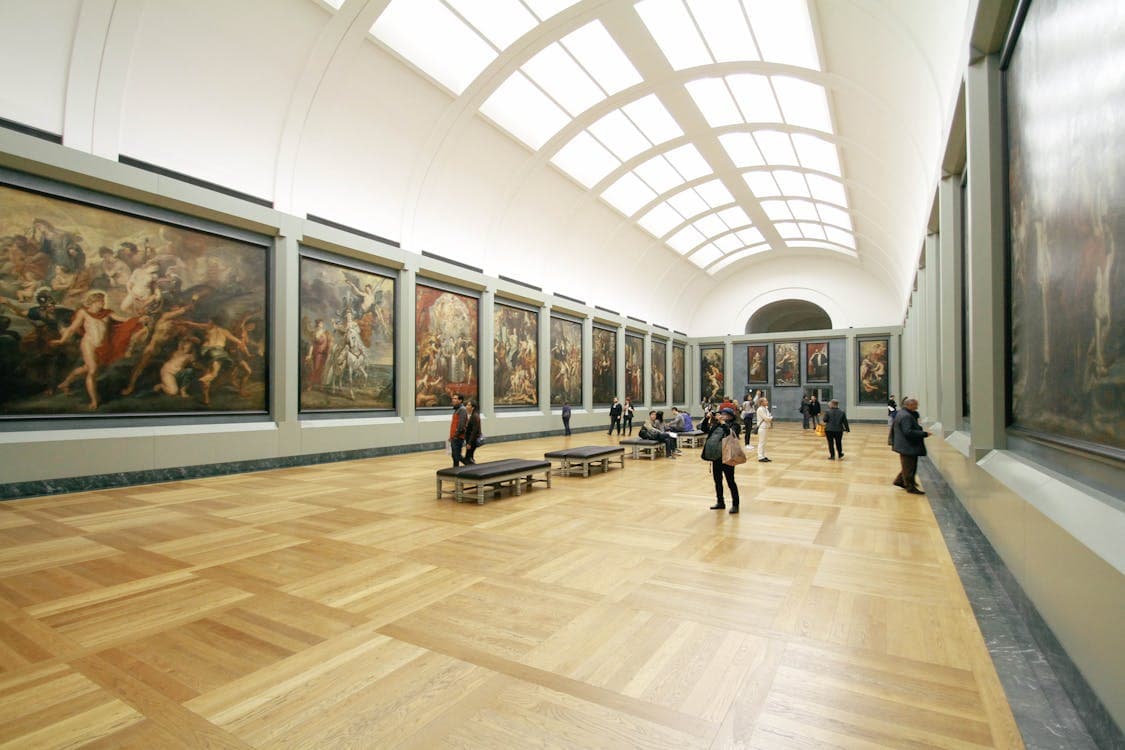
Renaissance art refers to the painting, sculpture, architecture, and decorative arts produced in Europe during the period roughly spanning the 14th through the 17th centuries. Originating in Italy during the late Middle Ages, the Renaissance marked a profound cultural shift characterized by a renewed interest in the classical art and philosophy of ancient Greece and Rome. Artists moved away from the flat, symbolic imagery of medieval art toward naturalistic depictions of the human body, convincing spatial depth achieved through linear perspective, and emotionally expressive compositions grounded in direct observation of the natural world.
The Italian Renaissance is traditionally divided into three phases: the Early Renaissance (circa 1400-1490), centered in Florence and driven by pioneers such as Masaccio, Brunelleschi, and Donatello; the High Renaissance (circa 1490-1527), dominated by Leonardo da Vinci, Michelangelo, and Raphael working primarily in Florence and Rome; and the Late Renaissance or Mannerist period (circa 1520-1600), which deliberately subverted High Renaissance ideals of harmony and proportion. The movement was sustained by a powerful system of patronage, with wealthy families like the Medici, the Catholic Church, and secular rulers commissioning works that simultaneously celebrated religious devotion, civic pride, and humanist learning.
Beyond Italy, Renaissance ideals spread throughout Europe in what is known as the Northern Renaissance. Artists such as Jan van Eyck, Albrecht Dürer, and Pieter Bruegel the Elder adapted Italian innovations to distinct regional traditions, placing particular emphasis on meticulous surface detail, oil painting technique, and scenes of everyday life. The legacy of Renaissance art is immense: it established the principles of pictorial composition, anatomical accuracy, and perspective that dominated Western art for centuries, and it elevated the social status of the artist from anonymous craftsman to celebrated creative genius.