Skip to content
Adaptive

Learn Music Education

Read the notes, then try the practice. It adapts as you go.When you're ready.

Session Length

~17 min

Adaptive Checks

15 questions

Transfer Probes

8

Lesson Notes

Music education is the field of study and practice concerned with the teaching and learning of music across all ages and settings. It encompasses a broad range of activities including instrumental and vocal instruction, music theory, ear training, composition, improvisation, and music appreciation. Music education takes place in diverse contexts, from formal K-12 classrooms and university conservatories to community music schools, private studios, and online platforms. The discipline draws on pedagogical traditions developed over centuries, including the influential methodologies of Zoltan Kodaly, Carl Orff, Emile Jaques-Dalcroze, and Shinichi Suzuki, each offering distinct philosophies about how musical understanding is best cultivated.

Research in music education has consistently demonstrated that musical training confers benefits well beyond musical skill itself. Studies show that learning music strengthens executive function, working memory, auditory processing, and spatial-temporal reasoning. For children, early music instruction has been linked to improved literacy skills, enhanced mathematical ability, and stronger social-emotional development. These findings have fueled advocacy efforts to maintain and expand music programs in public schools, even as budget pressures and standardized testing mandates have threatened arts education funding in many districts.

Contemporary music education is evolving rapidly in response to technological innovation, cultural diversification, and shifting educational philosophies. Digital audio workstations, music notation software, and online learning platforms have expanded access and transformed instructional methods. There is growing emphasis on culturally responsive teaching that honors diverse musical traditions beyond the Western classical canon, including world music, popular music, hip-hop, and indigenous musical practices. The field also increasingly embraces informal and community-based learning, recognizing that musical development occurs in many settings beyond the traditional classroom.
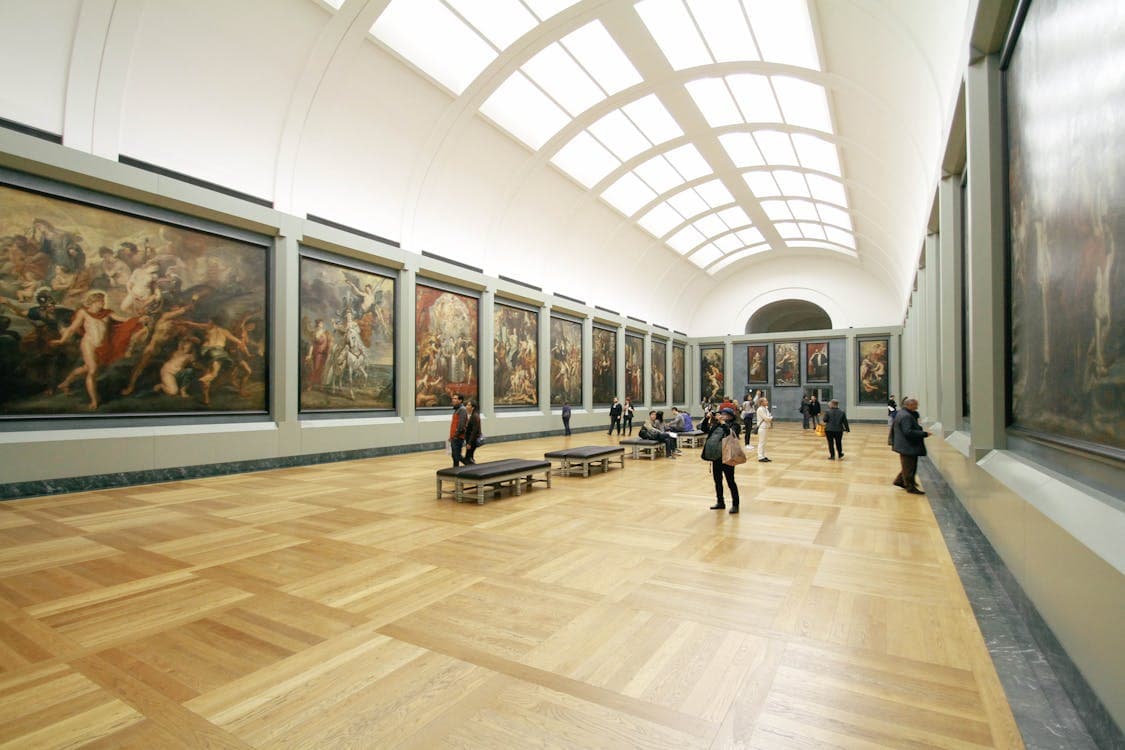
You'll be able to:

  • Design age-appropriate music curricula that integrate performance, theory, and ear training across developmental stages
  • Evaluate instructional methods for teaching instrumental and vocal technique to diverse learner populations
  • Apply Kodály, Orff, and Dalcroze approaches to develop rhythmic literacy and melodic understanding in students
  • Analyze assessment strategies that measure musical growth in both technical proficiency and creative expression

One step at a time.

Interactive Exploration

Adjust the controls and watch the concepts respond in real time.

Key Concepts

Kodaly Method

A sequential, voice-centered approach to music education developed by Hungarian composer Zoltan Kodaly. It emphasizes singing, solfege (movable do), hand signs, and the use of folk music as the foundation for musical literacy.

Example: A Kodaly-trained teacher introduces pentatonic folk songs through singing games, using hand signs for do-re-mi to build intervallic hearing before students ever read standard notation.

Orff Schulwerk

An approach to music education developed by Carl Orff that engages children through a combination of singing, movement, speech, and playing specially designed percussion instruments (Orff instruments). It emphasizes improvisation and creative exploration.

Example: Students create an ostinato pattern on xylophones and metallophones while classmates improvise a melody over the top, building ensemble skills through layered musical textures.

Suzuki Method

A music pedagogy created by Shinichi Suzuki based on the 'mother tongue' approach, which holds that children can learn music the same way they learn language: through immersion, listening, repetition, and parental involvement, beginning at a very young age.

Example: A three-year-old begins violin lessons by first listening to recordings of the Suzuki repertoire daily at home, then learning to play by ear with a parent attending every lesson.

Dalcroze Eurhythmics

A method developed by Emile Jaques-Dalcroze that teaches musical concepts through movement and physical response. Students experience rhythm, dynamics, and phrasing kinesthetically before learning to read or analyze them abstractly.

Example: Students walk in time to music, changing speed with tempo changes and freezing on rests, internalizing rhythmic concepts through whole-body movement before transferring them to an instrument.

Music Literacy

The ability to read, write, and comprehend standard music notation, including rhythm, pitch, dynamics, and form. Music literacy also extends to aural skills such as sight-singing and dictation.

Example: A student demonstrates music literacy by sight-reading a new melody in treble clef, correctly interpreting the key signature, time signature, and dynamic markings on the first attempt.

Audiation

A term coined by Edwin Gordon describing the ability to hear and comprehend music internally, without physical sound being present. Audiation is to music what thinking is to language; it is the foundation of musical understanding.

Example: A musician audiates when they silently read a musical score and can hear the harmonies, rhythms, and timbres in their mind before playing or singing a note.

Ensemble Pedagogy

The teaching and learning that occurs within group music-making settings such as bands, orchestras, choirs, and chamber groups. It involves developing not only individual musicianship but also skills in listening, blending, balance, and collaborative performance.

Example: A choir director uses sectional rehearsals to refine individual voice parts, then brings the full ensemble together to work on blend, intonation, and expressive interpretation of a four-part choral work.

Differentiated Instruction in Music

Adapting music teaching strategies, materials, and assessments to accommodate the diverse learning needs, abilities, and backgrounds of students within a single classroom or ensemble.

Example: In a mixed-ability guitar class, a teacher provides simplified chord charts for beginners, standard lead sheets for intermediate players, and jazz chord voicings for advanced students, all performing the same song together.

More terms are available in the glossary.

Explore your way

Choose a different way to engage with this topic — no grading, just richer thinking.

Explore your way — choose one:

Explore with AI →

Concept Map

See how the key ideas connect. Nodes color in as you practice.

Worked Example

Walk through a solved problem step-by-step. Try predicting each step before revealing it.

Adaptive Practice

This is guided practice, not just a quiz. Hints and pacing adjust in real time.

Small steps add up.

What you get while practicing:

  • Math Lens cues for what to look for and what to ignore.
  • Progressive hints (direction, rule, then apply).
  • Targeted feedback when a common misconception appears.

Teach It Back

The best way to know if you understand something: explain it in your own words.

Keep Practicing

More ways to strengthen what you just learned.

Music Education Adaptive Course - Learn with AI Support | PiqCue