Skip to content
Adaptive

Learn Human Geography

Read the notes, then try the practice. It adapts as you go.When you're ready.

Session Length

~13 min

Adaptive Checks

12 questions

Transfer Probes

6

Lesson Notes

Human geography is the branch of geography that studies the relationships between human societies and the spatial environments they inhabit. It examines how people organize themselves across the Earth's surface, how they interact with their environments, and how cultural, political, and economic processes shape the landscapes we live in. Unlike physical geography, which focuses on natural features such as landforms, climate, and ecosystems, human geography centers on the human dimensions of space, place, and territory, exploring topics from urbanization and migration to cultural diffusion and geopolitics.

The discipline draws on a rich intellectual tradition stretching back to classical thinkers such as Strabo and Ibn Khaldun, but it became formalized as an academic field in the 19th and early 20th centuries through the work of scholars like Carl Ritter, Paul Vidal de la Blache, and Friedrich Ratzel. Over the decades, human geography has evolved through several paradigmatic shifts, from environmental determinism to possibilism, from spatial science and quantitative revolution to humanistic, radical, and postmodern approaches. Today, human geographers employ a wide range of methods including Geographic Information Systems (GIS), fieldwork, ethnography, spatial statistics, and remote sensing.

Human geography has profound real-world relevance. It informs urban planning, international development, environmental policy, public health, migration governance, and conflict resolution. Understanding spatial patterns of inequality, cultural identity, resource distribution, and political power is essential for addressing pressing global challenges such as climate change, rapid urbanization, food security, and refugee crises. The field provides critical frameworks for analyzing how globalization connects distant places while simultaneously producing uneven development and social fragmentation.


You'll be able to:

  • Analyze spatial patterns of urbanization, migration, and economic development using geographic information systems and census data
  • Evaluate how cultural landscapes, place identity, and sense of belonging are shaped by globalization and mobility processes
  • Compare theoretical frameworks including Marxist geography, feminist geography, and postcolonial spatial theory for interpreting inequality
  • Apply diffusion models, central place theory, and spatial interaction concepts to explain human settlement and activity patterns

One step at a time.

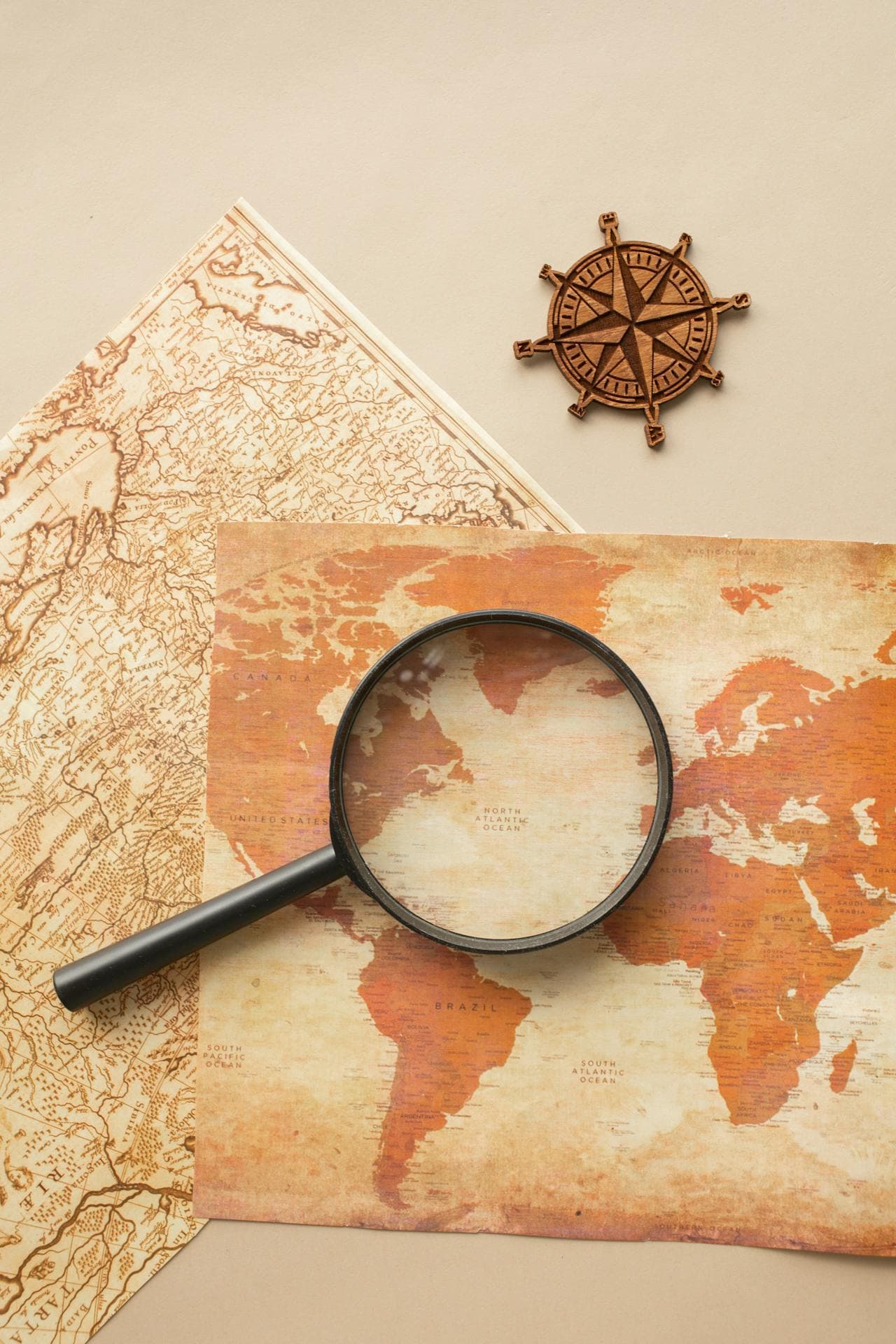
World map showing geographic patterns
Understanding spatial patterns in human activityPexels

Interactive Exploration

Adjust the controls and watch the concepts respond in real time.

Key Concepts

Globalization

The increasing interconnectedness of the world through flows of capital, goods, people, ideas, and technology across national borders, leading to greater economic integration, cultural exchange, and political interdependence.

World map showing global interconnections

Example: A smartphone designed in California, manufactured in China with minerals from the Democratic Republic of Congo, and sold in markets worldwide illustrates global commodity chains.

Urbanization

The process by which an increasing proportion of a population comes to live in cities and towns, driven by rural-to-urban migration, natural population growth in cities, and the reclassification of rural areas as urban.

Aerial view of urban sprawl and city growth

Example: Lagos, Nigeria, grew from roughly 1.4 million people in 1970 to over 15 million by 2020, exemplifying rapid urbanization in the Global South.

Cultural Diffusion

The spread of cultural traits, ideas, practices, or innovations from one society or region to another through migration, trade, media, or other forms of contact.

Example: The global spread of yoga from its origins in ancient India to fitness studios around the world represents hierarchical and stimulus diffusion of a cultural practice.

Migration

The movement of people from one place to another, whether voluntary or forced, temporary or permanent. Migration is driven by push factors (conflict, poverty, environmental degradation) and pull factors (economic opportunity, safety, family reunification).

Example: The Great Migration in the United States (1910-1970) saw approximately six million African Americans move from the rural South to cities in the North, Midwest, and West.

Spatial Inequality

The uneven distribution of wealth, resources, services, and opportunities across geographic space, occurring at scales from local neighborhoods to global regions.

Example: Life expectancy can differ by more than 20 years between neighboring zip codes in some American cities, reflecting deep spatial inequalities in access to healthcare, nutrition, and safe environments.

Place and Sense of Place

Place refers to a location with meaning attached to it by human experience, emotion, and memory. Sense of place describes the subjective emotional bonds and identity people develop with specific locations.

Example: The French Quarter in New Orleans holds a deep sense of place shaped by its jazz heritage, Creole architecture, and cultural history, distinguishing it from any other neighborhood.

Demographic Transition Model

A model that describes population change over time as societies develop economically, moving through stages from high birth and death rates to low birth and death rates.

Population pyramid showing age-sex distribution

Example: Sweden's demographic history closely follows the model: pre-industrial high birth and death rates gave way to declining death rates, then declining birth rates, resulting in a stable, aging population.

Geopolitics

The study of how geographic factors such as location, territory, resources, and borders influence political power, international relations, and state behavior.

Example: Control of the Strait of Hormuz, through which approximately 20% of the world's oil passes, gives Iran significant geopolitical leverage in the Middle East.

More terms are available in the glossary.

Explore your way

Choose a different way to engage with this topic — no grading, just richer thinking.

Explore your way — choose one:

Explore with AI →

Concept Map

See how the key ideas connect. Nodes color in as you practice.

Worked Example

Walk through a solved problem step-by-step. Try predicting each step before revealing it.

Adaptive Practice

This is guided practice, not just a quiz. Hints and pacing adjust in real time.

Small steps add up.

What you get while practicing:

  • Math Lens cues for what to look for and what to ignore.
  • Progressive hints (direction, rule, then apply).
  • Targeted feedback when a common misconception appears.

Teach It Back

The best way to know if you understand something: explain it in your own words.

Keep Practicing

More ways to strengthen what you just learned.

Human Geography Adaptive Course - Learn with AI Support | PiqCue