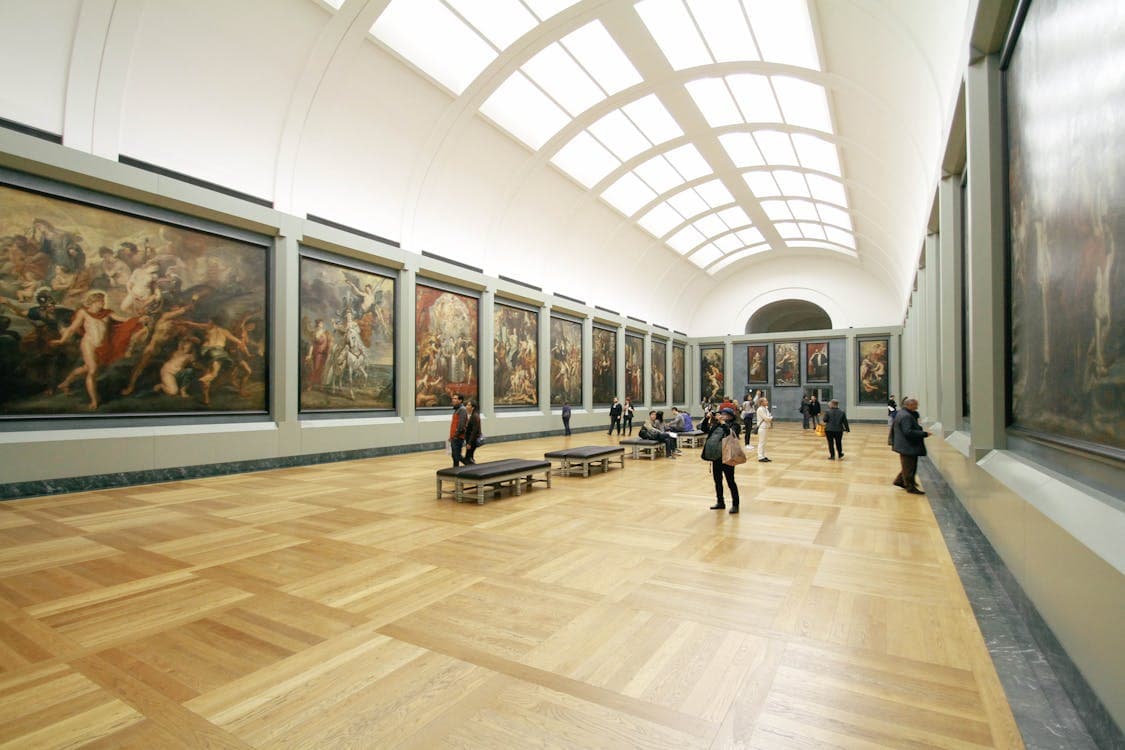
History
IntermediateHistory is the scholarly discipline devoted to studying, interpreting, and narrating the human past. Far more than a simple chronicle of dates and events, history encompasses historiography -- the study of how historical knowledge itself is produced, debated, and revised over time. Historians employ rigorous methods of source analysis, distinguishing between primary sources (documents, artifacts, and testimonies created during the period under study) and secondary sources (later interpretations and analyses). By examining evidence through multiple lenses -- political, social, economic, cultural, and environmental -- historians construct narratives that help societies understand how the present emerged from the past and how human agency, structural forces, and contingency interact to shape events.
The discipline conventionally divides the human past into broad periods such as antiquity, the medieval era, the early modern period, and the modern age, though historians increasingly question the boundaries and Eurocentrism of these traditional frameworks. Major transformative processes studied by historians include the rise and fall of empires, the development of world religions, the Atlantic slave trade, the Enlightenment, the Industrial Revolution, colonialism and decolonization, the world wars, and the emergence of globalization. Thematic subfields such as social history, gender history, environmental history, and digital history continue to expand the kinds of questions historians ask and the voices they recover from the archive.
History matters because it cultivates critical thinking, empathy, and civic awareness. By learning to evaluate competing accounts, identify bias, and weigh evidence, students of history develop analytical skills transferable to law, journalism, policy, business, and everyday citizenship. Historical literacy guards against propaganda, historical myths, and the manipulation of collective memory. Understanding the origins of contemporary institutions, conflicts, and inequalities equips individuals and communities to make more informed decisions about their shared future.
Practice a little. See where you stand.
Quiz
Reveal what you know — and what needs work
Adaptive Learn
Responds to how you reason, with real-time hints
Flashcards
Build recall through spaced, active review
Cheat Sheet
The essentials at a glance — exam-ready
Glossary
Master the vocabulary that unlocks understanding
Learning Roadmap
A structured path from foundations to mastery
Book
Deep-dive guide with worked examples
Timeline
Put events in the right order
Key Concepts
One concept at a time.
Explore your way
Choose a different way to engage with this topic — no grading, just richer thinking.
Explore your way — choose one:
Curriculum alignment— Standards-aligned
Grade level
Learning objectives
- •Analyze primary and secondary sources using historical methodology to construct evidence-based interpretations of past events
- •Evaluate competing historiographic perspectives including Marxist, feminist, and postcolonial frameworks for interpreting change over time
- •Compare political, economic, and cultural factors that drove major turning points including revolutions, migrations, and empire building
- •Apply periodization concepts and causal reasoning to explain continuity and change across civilizations and eras
Recommended Resources
This page contains affiliate links. We may earn a commission at no extra cost to you.
Books
What Is History?
by E.H. Carr
A History of the World in 6 Glasses
by Tom Standage
The Landscape of History: How Historians Map the Past
by John Lewis Gaddis
Sapiens: A Brief History of Humankind
by Yuval Noah Harari
Related Topics
Ancient History
The study of early human civilizations from the invention of writing through the fall of Rome, covering Mesopotamia, Egypt, Greece, Rome, and beyond.
Modern History
The study of world events from the late 15th century to the present, covering revolutions, world wars, decolonization, and globalization.
Medieval History
The study of European civilization from the fall of Rome (476 CE) to the fall of Constantinople (1453 CE), covering feudalism, the Crusades, the Church, and the cultural and political evolution of the Middle Ages.
Political Science
The study of governments, political systems, power dynamics, and public policy, examining how societies organize authority and make collective decisions.
Archaeology
The scientific study of human history and prehistory through the excavation and analysis of material remains, artifacts, and cultural landscapes.
Anthropology
Anthropology is the holistic study of human cultures, biology, languages, and past societies, using immersive fieldwork and comparative analysis to understand the full diversity of the human experience.
History — Berlin conference, Primary treaty (extended)
History is the study of the human past through the critical analysis of sources, events, and processes, helping us understand how societies have changed over time and why those changes matter today.