Skip to content
Adaptive

Learn Genetics

Read the notes, then try the practice. It adapts as you go.When you're ready.

Session Length

~17 min

Adaptive Checks

15 questions

Transfer Probes

8

Lesson Notes

Genetics is the branch of biology that studies genes, heredity, and the variation of organisms. At its core, genetics seeks to understand how traits are passed from parents to offspring through the molecule of inheritance, deoxyribonucleic acid (DNA). DNA is a double-stranded helical polymer composed of nucleotide subunits, each containing one of four nitrogenous bases: adenine, thymine, cytosine, and guanine. The specific sequence of these bases encodes the instructions for building proteins, which carry out the vast majority of cellular functions. From Gregor Mendel's pioneering work with pea plants in the 1860s to the discovery of the DNA double helix by Watson and Crick in 1953, the science of genetics has fundamentally transformed our understanding of how life propagates and diversifies.

Heredity operates through well-defined molecular and cellular mechanisms. During reproduction, genetic information is transmitted via chromosomes, which are organized structures of DNA and histone proteins. Each gene occupies a specific locus on a chromosome and may exist in alternative forms called alleles, which give rise to phenotypic variation within populations. Mendel's laws of segregation and independent assortment describe how alleles separate during gamete formation and recombine during fertilization, producing the predictable inheritance patterns observed in many organisms. Modern molecular genetics has revealed additional layers of complexity, including gene linkage, epistasis, polygenic inheritance, and epigenetic modifications that can alter gene expression without changing the underlying DNA sequence. These discoveries have expanded the classical Mendelian framework into a richer, more nuanced understanding of inheritance.

The genomics revolution of the late twentieth and early twenty-first centuries has propelled genetics into the forefront of medicine, agriculture, forensics, and biotechnology. The completion of the Human Genome Project in 2003 provided a comprehensive reference sequence of the approximately 3.2 billion base pairs in human DNA, catalyzing advances in personalized medicine, pharmacogenomics, and genetic diagnostics. Technologies such as CRISPR-Cas9 gene editing now allow precise modifications to the genomes of virtually any organism, opening transformative possibilities for treating genetic diseases, engineering disease-resistant crops, and developing gene therapies. As the cost of DNA sequencing continues to plummet and bioinformatics tools grow more powerful, genetics is increasingly central to addressing global challenges in health, food security, and conservation biology.

You'll be able to:

  • Identify the principles of Mendelian inheritance including dominance, segregation, and independent assortment of alleles
  • Apply Punnett squares and pedigree analysis to predict inheritance patterns for monogenic and multifactorial traits
  • Analyze molecular genetics concepts including DNA replication, gene expression, and mutation types at the chromosomal level
  • Evaluate the implications of genomic technologies including whole-genome sequencing and gene therapy for personalized medicine

One step at a time.

DNA double helix illustration
The molecular basis of heredityPexels

Interactive Exploration

Adjust the controls and watch the concepts respond in real time.

Key Concepts

DNA Structure

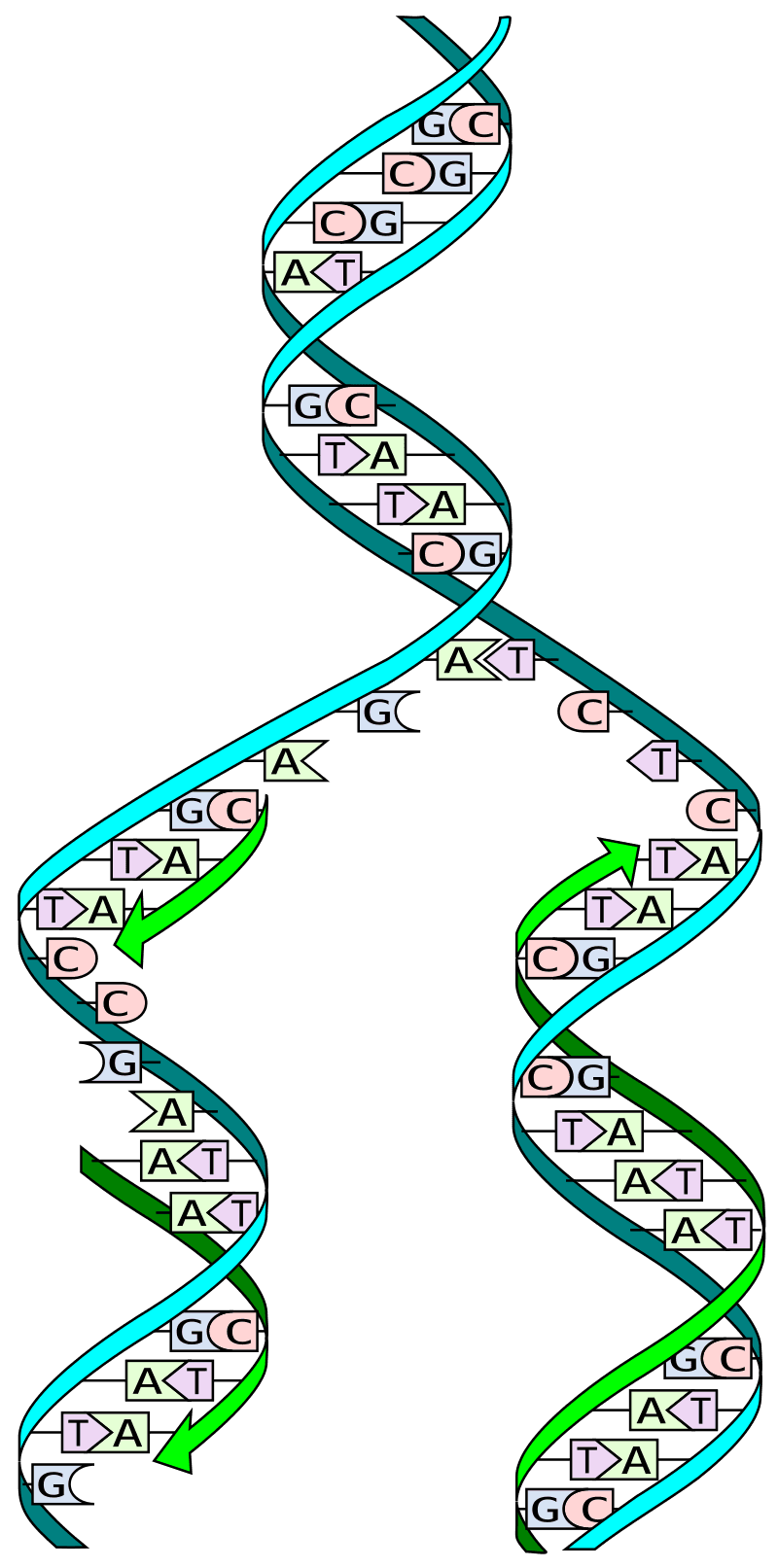
DNA (deoxyribonucleic acid) is a double-stranded helical molecule composed of nucleotides, each consisting of a deoxyribose sugar, a phosphate group, and one of four nitrogenous bases (adenine, thymine, cytosine, guanine). The two strands run antiparallel and are held together by hydrogen bonds between complementary base pairs, with adenine pairing with thymine and cytosine pairing with guanine.

DNA double helix with labeled nucleotide base pairs

Example: The human genome contains approximately 3.2 billion base pairs of DNA distributed across 23 pairs of chromosomes, with the entire molecule in a single cell stretching about two meters if fully uncoiled.

Genes

A gene is a discrete segment of DNA that contains the instructions for producing a functional product, typically a protein or a functional RNA molecule. Genes are the fundamental units of heredity, and the human genome contains approximately 20,000 to 25,000 protein-coding genes, though many additional non-coding sequences play regulatory roles.

Example: The CFTR gene on chromosome 7 encodes a chloride ion channel protein, and mutations in this gene cause cystic fibrosis, one of the most common inherited diseases in people of European descent.

Alleles

Alleles are alternative forms of a gene that arise through mutation and occupy the same locus on homologous chromosomes. An organism may be homozygous (carrying two identical alleles) or heterozygous (carrying two different alleles) at a given locus, and the combination of alleles influences the organism's phenotype.

Example: The ABO blood group system is determined by three alleles (IA, IB, and i) of the ABO gene, producing four possible blood types: A, B, AB, and O, depending on which alleles an individual inherits.

Mendelian Inheritance

Mendelian inheritance describes the patterns of heredity first elucidated by Gregor Mendel, governed by the Law of Segregation (each organism carries two alleles per gene, which separate during gamete formation) and the Law of Independent Assortment (alleles of different genes assort independently during meiosis). These principles predict the ratios of genotypes and phenotypes observed in genetic crosses.

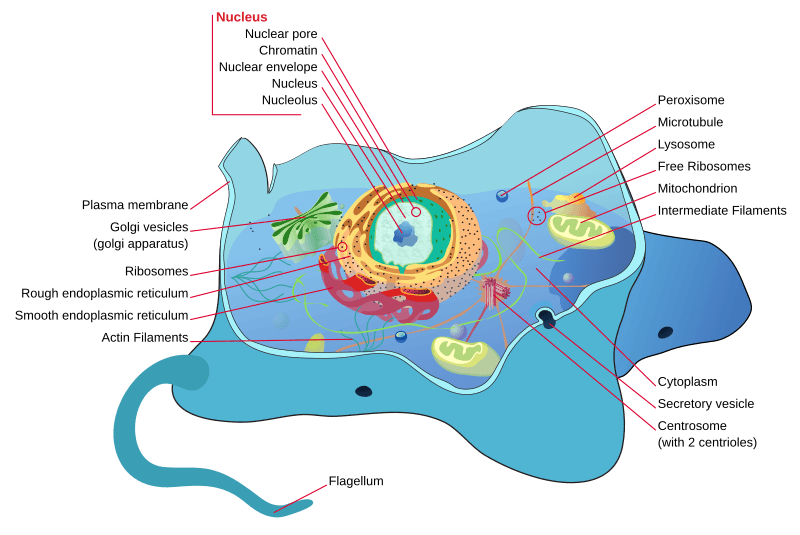
Cells showing genetic inheritance patterns

Example: A cross between two heterozygous pea plants (Rr x Rr) for seed shape produces a 3:1 phenotypic ratio of round to wrinkled seeds in the offspring, consistent with Mendel's predictions.

Dominant and Recessive Traits

A dominant allele expresses its phenotypic effect in both the homozygous and heterozygous conditions, while a recessive allele only manifests its phenotype when present in the homozygous state. Dominance is a relationship between alleles at a single locus and does not imply that the dominant allele is more common or more advantageous in a population.

Example: In humans, the allele for Huntington's disease is dominant, meaning that inheriting just one copy of the mutant allele from either parent is sufficient to cause the disorder, whereas the allele for sickle cell disease is recessive and requires two copies for the full disease phenotype.

Genotype and Phenotype

The genotype is the specific set of alleles carried by an organism at one or more genetic loci, while the phenotype is the observable expression of those alleles as physical traits, biochemical characteristics, or behaviors. The relationship between genotype and phenotype is influenced by dominance patterns, gene interactions, and environmental factors.

Example: Two pea plants may both display a tall phenotype, but one could have the homozygous genotype TT while the other is heterozygous Tt, a distinction that becomes apparent only when their offspring are analyzed.

Mutations

A mutation is a permanent alteration in the nucleotide sequence of DNA that can occur spontaneously during replication or be induced by mutagens such as ultraviolet radiation or certain chemicals. Mutations range from single-nucleotide changes (point mutations) to large-scale chromosomal rearrangements and serve as the ultimate source of all genetic variation.

Example: A single point mutation in the HBB gene that substitutes valine for glutamic acid at position six of the beta-globin protein causes sickle cell anemia, dramatically altering the shape and function of red blood cells.

Genetic Engineering

Genetic engineering encompasses a set of technologies used to directly manipulate an organism's genome by adding, deleting, or modifying specific DNA sequences. Modern tools such as CRISPR-Cas9 allow researchers to make precise, targeted edits to the genomes of bacteria, plants, animals, and human cells with unprecedented efficiency and accuracy.

Example: Golden rice was genetically engineered by inserting genes from daffodil and the bacterium Erwinia uredovora into rice, enabling the grain to produce beta-carotene (a precursor of vitamin A) to help combat vitamin A deficiency in developing countries.

More terms are available in the glossary.

Explore your way

Choose a different way to engage with this topic β€” no grading, just richer thinking.

Explore your way β€” choose one:

Explore with AI β†’

Concept Map

See how the key ideas connect. Nodes color in as you practice.

Worked Example

Walk through a solved problem step-by-step. Try predicting each step before revealing it.

Adaptive Practice

This is guided practice, not just a quiz. Hints and pacing adjust in real time.

Small steps add up.

What you get while practicing:

  • Math Lens cues for what to look for and what to ignore.
  • Progressive hints (direction, rule, then apply).
  • Targeted feedback when a common misconception appears.

Teach It Back

The best way to know if you understand something: explain it in your own words.

Keep Practicing

More ways to strengthen what you just learned.

Genetics Adaptive Course - Learn with AI Support | PiqCue