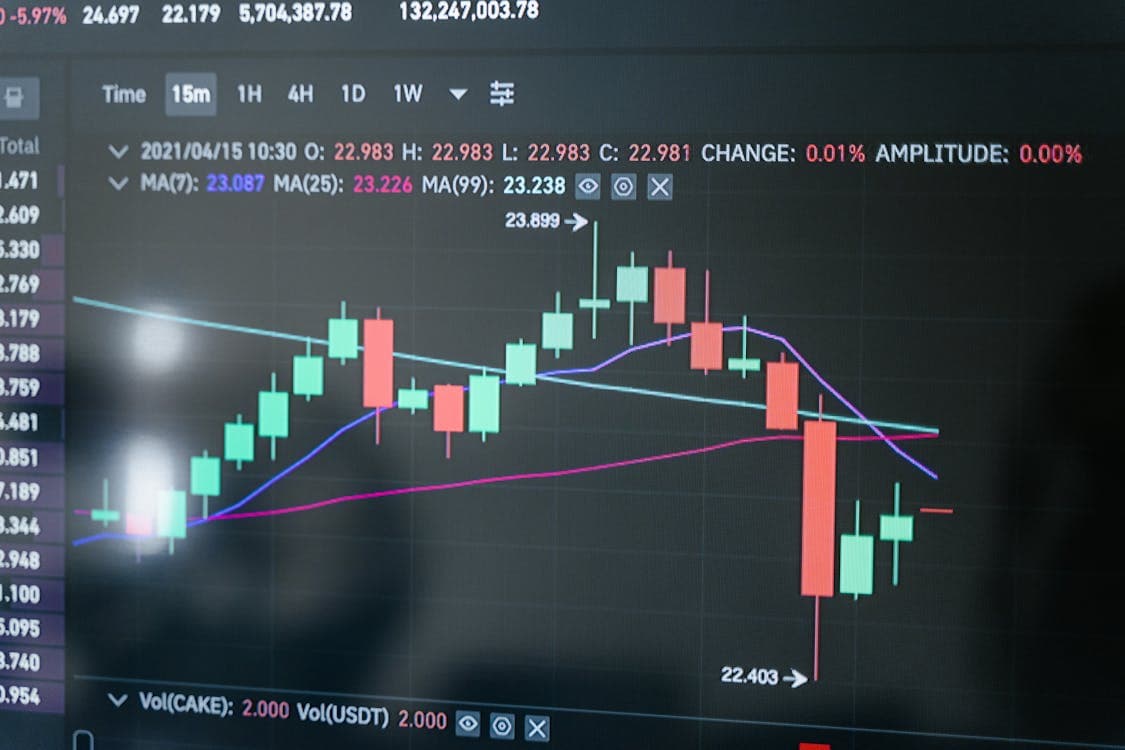
Finance
IntermediateFinance is the study of how individuals, businesses, and institutions manage money, assets, and liabilities over time under conditions of uncertainty. At its core, finance addresses three fundamental questions: how to raise capital, how to allocate capital efficiently, and how to manage the risks that accompany financial decisions. The discipline encompasses corporate finance, which deals with funding sources, capital structuring, and investment decisions within firms; investments, which focuses on the analysis and management of financial securities such as stocks and bonds; and financial markets, which examines the institutions and mechanisms through which capital is traded and prices are determined.
Modern finance rests on several foundational principles that guide both theory and practice. The time value of money establishes that a dollar today is worth more than a dollar in the future due to its earning potential. The risk-return tradeoff holds that higher expected returns require accepting greater uncertainty. Portfolio theory, pioneered by Harry Markowitz, demonstrated that diversification can reduce risk without proportionally sacrificing return. The Efficient Market Hypothesis, developed by Eugene Fama, suggests that asset prices reflect all available information, making it difficult to consistently outperform the market. These principles, alongside tools like net present value analysis and the Capital Asset Pricing Model, form the analytical backbone of financial decision-making.
Personal finance applies many of these same concepts at the individual level, encompassing budgeting, saving, investing, retirement planning, tax optimization, and debt management. Whether you are an individual building a retirement portfolio, an analyst valuing a corporation, or a trader pricing derivatives, the principles of finance provide a rigorous framework for making decisions that balance expected reward against potential loss. Understanding finance is essential not only for careers in banking, asset management, and corporate strategy, but also for anyone seeking to make informed decisions about their own financial well-being.
Practice a little. See where you stand.
Quiz
Reveal what you know — and what needs work
Adaptive Learn
Responds to how you reason, with real-time hints
Flashcards
Build recall through spaced, active review
Cheat Sheet
The essentials at a glance — exam-ready
Glossary
Master the vocabulary that unlocks understanding
Learning Roadmap
A structured path from foundations to mastery
Book
Deep-dive guide with worked examples
Calculator
Run the numbers and build intuition
Role-play
Think like an expert — no grading
Key Concepts
One concept at a time.
Explore your way
Choose a different way to engage with this topic — no grading, just richer thinking.
Explore your way — choose one:
Curriculum alignment— Standards-aligned
Grade level
Learning objectives
- •Identify core financial concepts including time value of money, risk-return tradeoff, and capital structure principles
- •Apply discounted cash flow analysis and financial ratio techniques to evaluate corporate valuation and investment opportunities
- •Analyze portfolio diversification strategies using modern portfolio theory and asset pricing models for risk management
- •Evaluate capital budgeting decisions by comparing net present value, internal rate of return, and weighted average cost methods
Recommended Resources
This page contains affiliate links. We may earn a commission at no extra cost to you.
Books
Principles of Corporate Finance
by Richard Brealey, Stewart Myers, Franklin Allen
The Intelligent Investor
by Benjamin Graham
A Random Walk Down Wall Street
by Burton Malkiel
Corporate Finance: The Core
by Jonathan Berk, Peter DeMarzo
Related Topics
Personal Finance
Personal finance covers budgeting, saving, investing, debt management, and financial planning -- the essential skills for building financial security and achieving long-term wealth.
Corporate Finance
The study of how corporations make financial decisions about funding, investment, and capital allocation to maximize shareholder value.
Economics
Economics studies how individuals, firms, and governments allocate scarce resources, examining supply and demand, market structures, GDP, inflation, monetary and fiscal policy, international trade, and market failures to understand the forces that drive production, consumption, and wealth distribution.
Stock Market Investing
The practice of buying and selling shares of publicly traded companies to build wealth, involving analysis of financial markets, valuation, and risk management.
Financial Markets
The study of organized systems where financial assets are traded, including stock exchanges, bond markets, forex, and derivatives markets.