Skip to content
Adaptive

Learn Ecology

Read the notes, then try the practice. It adapts as you go.When you're ready.

Session Length

~17 min

Adaptive Checks

15 questions

Transfer Probes

8

Lesson Notes

Ecology is the scientific study of the interactions between organisms and their environment, encompassing both the living (biotic) and nonliving (abiotic) components of natural systems. At its core, ecology seeks to understand how energy flows and matter cycles through ecosystems, from the microscopic communities in a drop of pond water to the vast biomes that span continents. Ecologists investigate how populations grow and regulate themselves, how species interact through competition, predation, mutualism, and parasitism, and how these relationships shape the structure and function of biological communities.

Biodiversity, the variety of life at genetic, species, and ecosystem levels, is a central theme in ecology. Diverse ecosystems tend to be more resilient and productive, providing essential services such as clean air and water, pollination, nutrient cycling, and climate regulation. Ecologists study how biodiversity is distributed across the planet, why some regions harbor extraordinary numbers of species while others support relatively few, and how the loss of species can cascade through food webs with far-reaching consequences for ecosystem stability.

Conservation ecology applies ecological principles to protect and restore natural systems threatened by habitat destruction, pollution, invasive species, overexploitation, and climate change. By understanding carrying capacity, minimum viable population sizes, ecological succession, and the connectivity of habitat corridors, conservation ecologists design strategies to preserve endangered species and maintain ecosystem health. The field bridges pure science and applied management, making ecology one of the most urgent and consequential disciplines in the modern era.

You'll be able to:

  • Identify the levels of ecological organization from populations through communities, ecosystems, and biomes with key examples
  • Apply population dynamics models including logistic growth and predator-prey relationships to predict species abundance changes
  • Analyze energy flow and nutrient cycling pathways to explain how ecosystems maintain productivity and resilience
  • Evaluate conservation strategies by assessing biodiversity metrics, habitat fragmentation, and ecosystem services valuations critically

One step at a time.

Plants in a natural ecosystem
Life sustained by sunlightPexels

Interactive Exploration

Adjust the controls and watch the concepts respond in real time.

Key Concepts

Ecosystem

A community of living organisms together with the nonliving components of their environment, interacting as a system through nutrient cycles and energy flows. Ecosystems can range in size from a small tide pool to an entire ocean basin.

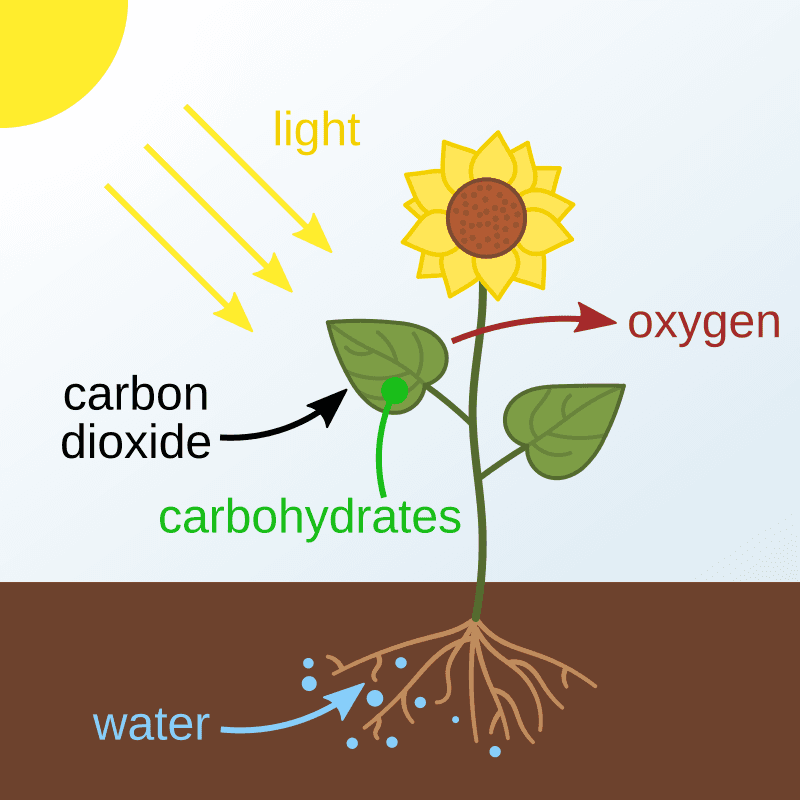
Plants performing photosynthesis in an ecosystem

Example: A coral reef ecosystem includes fish, corals, algae, invertebrates, bacteria, and the surrounding water, sunlight, minerals, and temperature conditions that sustain them.

Food Web

A complex network of interconnected food chains showing the feeding relationships among organisms in an ecosystem. Unlike a simple food chain, a food web reflects the reality that most organisms consume and are consumed by multiple species.

Example: In an Arctic food web, a polar bear may eat seals, fish, and seabirds, while seals eat fish and crustaceans, and fish eat zooplankton, creating an interconnected web of energy transfer.

Biodiversity

The variety of life in a particular habitat or ecosystem, measured at three levels: genetic diversity within species, species diversity within communities, and ecosystem diversity across landscapes. Higher biodiversity generally correlates with greater ecosystem resilience.

Example: The Amazon rainforest is one of the most biodiverse places on Earth, containing roughly 10% of all known species, including over 40,000 plant species, 1,300 bird species, and 3,000 types of fish.

Carrying Capacity

The maximum population size of a species that an environment can sustain indefinitely given the available food, water, habitat, and other resources. It is denoted by the letter K in population ecology models.

Example: A small island with limited grass can support a herd of only about 200 deer. If the population exceeds this carrying capacity, overgrazing leads to food scarcity and the population declines.

Ecological Succession

The process of change in the species composition of a community over time following a disturbance. Primary succession occurs on barren surfaces where no soil exists, while secondary succession occurs in areas where a disturbance has destroyed a community but left the soil intact.

Example: After a forest fire, grasses and wildflowers colonize the burned area first, followed by shrubs, then fast-growing pioneer trees like aspens, and eventually shade-tolerant species like oaks and maples in a predictable sequence.

Nutrient Cycling

The movement and exchange of organic and inorganic matter back into the production of living organisms. Major biogeochemical cycles include the carbon, nitrogen, phosphorus, and water cycles, each essential for sustaining life on Earth.

Example: In the nitrogen cycle, bacteria convert atmospheric nitrogen gas into ammonia (nitrogen fixation), plants absorb it as nitrate, animals eat the plants, and decomposers return nitrogen to the soil when organisms die.

Keystone Species

A species that has a disproportionately large effect on its ecosystem relative to its abundance. Removing a keystone species triggers significant changes in ecosystem structure and can lead to the decline or loss of many other species.

Example: Sea otters are a keystone species in Pacific kelp forests. By preying on sea urchins, otters prevent urchin populations from overgrazing kelp, maintaining the entire forest ecosystem that shelters hundreds of other species.

Biome

A large-scale biological community classified by its dominant vegetation and characterized by the regional climate, particularly temperature and precipitation patterns. Earth's major terrestrial biomes include tundra, boreal forest, temperate forest, grassland, desert, and tropical rainforest.

Example: The savanna biome, found in Africa, South America, and Australia, is characterized by warm temperatures year-round, a distinct wet and dry season, and a landscape of scattered trees amid extensive grasslands.

More terms are available in the glossary.

Explore your way

Choose a different way to engage with this topic β€” no grading, just richer thinking.

Explore your way β€” choose one:

Explore with AI β†’

Concept Map

See how the key ideas connect. Nodes color in as you practice.

Worked Example

Walk through a solved problem step-by-step. Try predicting each step before revealing it.

Adaptive Practice

This is guided practice, not just a quiz. Hints and pacing adjust in real time.

Small steps add up.

What you get while practicing:

  • Math Lens cues for what to look for and what to ignore.
  • Progressive hints (direction, rule, then apply).
  • Targeted feedback when a common misconception appears.

Teach It Back

The best way to know if you understand something: explain it in your own words.

Keep Practicing

More ways to strengthen what you just learned.

Ecology Adaptive Course - Learn with AI Support | PiqCue