
Cellular Respiration
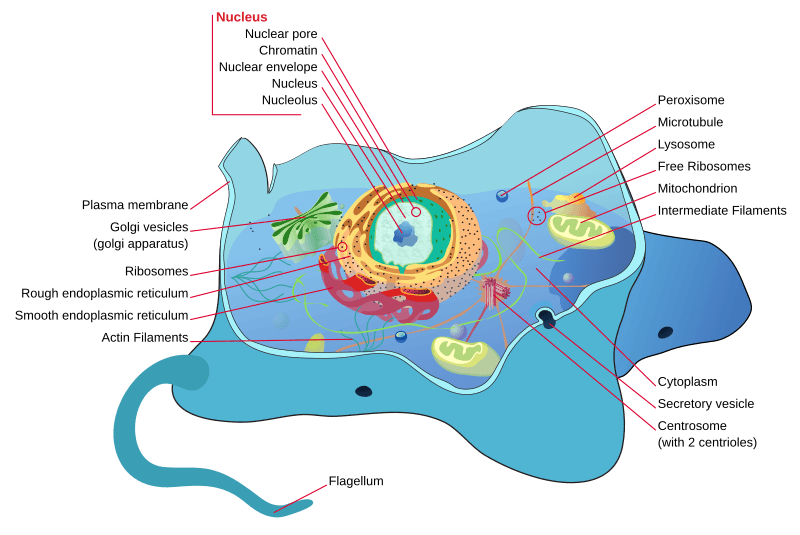
IntermediateCellular respiration is the set of metabolic reactions that cells use to convert the chemical energy stored in glucose and other organic molecules into adenosine triphosphate (ATP), the universal energy currency of life. The process occurs in three main stages: glycolysis in the cytoplasm, the Krebs cycle (citric acid cycle) in the mitochondrial matrix, and the electron transport chain on the inner mitochondrial membrane. Together, these stages extract energy through a series of controlled oxidation-reduction reactions, ultimately producing 36 to 38 ATP molecules per glucose.
The efficiency of cellular respiration depends on oxygen availability. In aerobic conditions, the full pathway operates, yielding maximum ATP. When oxygen is scarce, cells resort to anaerobic fermentation -- either lactic acid fermentation in animal muscle cells or alcoholic fermentation in yeast -- which regenerates NAD+ to sustain glycolysis but produces only 2 ATP per glucose. Understanding this distinction is critical for fields ranging from exercise physiology to food science and industrial biotechnology.
Cellular respiration and photosynthesis form a complementary cycle in the biosphere: photosynthesis captures solar energy and stores it in glucose, while respiration releases that energy for cellular work. The carbon, oxygen, and hydrogen atoms cycle between CO2, H2O, and organic molecules, maintaining the chemical balance that sustains life on Earth. Disruptions to cellular respiration -- whether from metabolic poisons like cyanide, genetic mitochondrial disorders, or oxygen deprivation -- can be immediately life-threatening, underscoring the central importance of this pathway.
Practice a little. See where you stand.
Quiz
Reveal what you know — and what needs work
Adaptive Learn
Responds to how you reason, with real-time hints
Flashcards
Build recall through spaced, active review
Cheat Sheet
The essentials at a glance — exam-ready
Glossary
Master the vocabulary that unlocks understanding
Learning Roadmap
A structured path from foundations to mastery
Book
Deep-dive guide with worked examples
Role-play
Think like an expert — no grading
Key Concepts
One concept at a time.
Explore your way
Choose a different way to engage with this topic — no grading, just richer thinking.
Explore your way — choose one:
Curriculum alignment— Standards-aligned
Grade level
Learning objectives
- •Describe the four stages of aerobic cellular respiration and identify where each occurs in the cell
- •Calculate the net ATP yield from each stage and the total yield per glucose molecule
- •Explain how the electron transport chain uses NADH and FADH2 to generate a proton gradient and drive ATP synthesis via chemiosmosis
- •Compare aerobic respiration with anaerobic fermentation in terms of inputs, outputs, and ATP efficiency
- •Predict the effects of metabolic inhibitors (such as cyanide, DNP, and oligomycin) on specific stages of the pathway
Related Topics
Biology
Biology is the scientific study of life, covering topics from molecular processes within cells to the ecology of entire ecosystems, and providing the foundation for medicine, biotechnology, and environmental science.
Cell Biology
The study of cell structure, function, and behavior, examining how cells serve as the fundamental units of life in all organisms.
Biochemistry
The study of chemical processes within and relating to living organisms, focusing on the structure and function of biomolecules such as proteins, nucleic acids, carbohydrates, and lipids.
Ecology
The scientific study of how organisms interact with each other and their environment, encompassing ecosystems, biodiversity, energy flow, and conservation of natural systems.